Little Wandle Phonics
Phonics and Early Reading
National Phonics Screening Check
The Year 1 phonics screening check is not a formal test, but a way for teachers to ensure that children are making sufficient progress with their blending skills and that they are on track to become fluent readers who can enjoy reading for pleasure and for learning. It is taken individually by all children in Year 1 in England, and is usually taken in June. It will help to identify whether your child needs additional support at this stage so that they do not fall behind in this vital early reading skill.
There are two sections in this 40-word check and it assesses phonics skills and knowledge learned through Reception and Year 1. Your child will read up to four words per page for their teacher and they will probably do the check in one sitting of about 5–10 minutes.
It checks that your child can:
- Sound out and blend graphemes in order to read simple words.
- Read phonically decodable one-syllable and two-syllable words, e.g. cat, sand, windmill.
- Read a selection of nonsense words which are referred to as pseudo words.
What are nonsense or pseudo words and why are they included?
These are words that are phonically decodable but are not actual words with an associated meaning e.g. brip, snorb. Pseudo words are included in the check specifically to assess whether your child can decode a word using phonics skills and not their memory.
The pseudo words will be shown to your child with a picture of a monster and they will be asked to tell their teacher what sort of monster it is by reading the word. This not only makes the check a bit more fun, but provides the children with a context for the nonsense word which is independent from any existing vocabulary they may have. Crucially, it does not provide any clues, so your child just has to be able to decode it. Children generally find nonsense amusing so they will probably enjoy reading these words.
How will my child be scored? Is there a pass mark?
The check is not about passing or failing but checking appropriate progress is being made. If children do not reach the required standard, then the teacher will be in touch to discuss plans and offer additional, tailored support to ensure that your child can catch up. Children progress at different speeds so not reaching the threshold score does not necessarily mean there is a serious problem. Your child will re-sit the check the following summer term.
For the last few years, the threshold mark (or pass standard) set by the government has been 32 correct answers out of 40.
What happens to the results?
The school will report your child’s results to you by the end of the summer term as well as to the local authority, but the results won’t be published in a league table as with SATs. If you have any concerns, do talk to your teacher about this in a parents’ meeting or after school.
What can I do to help my child?
Check with your child’s teacher if there are any particular areas that you should focus on at home so that you are working together to support your child.
Little Wandle Phonics and Early Reading Programme
We follow Little Wandle Letters and Sounds Revised which is a complete systematic synthetic phonics (SSP) programme which has been built around the update (Department for Education- Letters and Sounds improving rates of progress 2021) and draws on excellent practice. The programme was developed by English hubs, working in partnership with phonics and early reading experts. It draws on the latest research into how children learn best, how to ensure learning stays in children’s long term memory and how best to enable children to apply their learning to become highly competent readers.
It incorporates seven features of effective phonics practice:
- direct teaching in frequent, short bursts
- consistency of approach
- secure, systematic progression in phonics learning
- maintaining pace of learning
- providing repeated practice
- application of phonics using matched decodable books
- early identification of children at risk of falling behind, linked to the provision of effective keep-up support
Little Wandle Letters and Sounds Revised 2021:
Programme progression
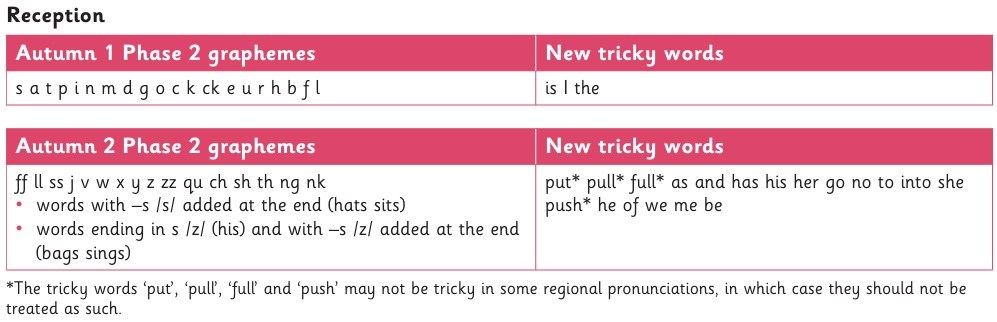
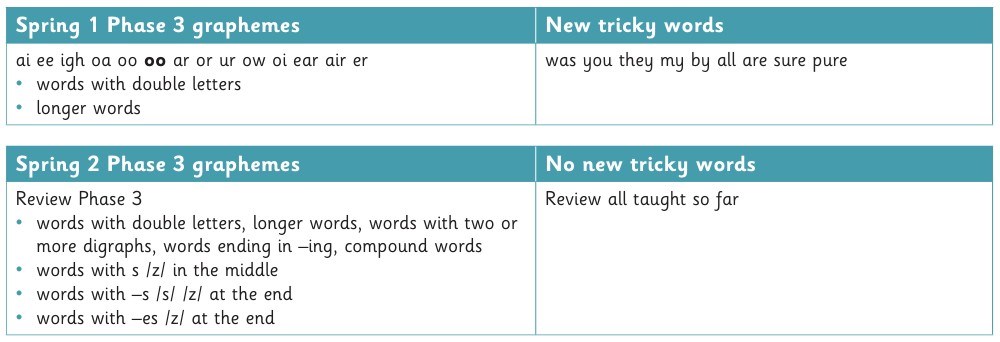
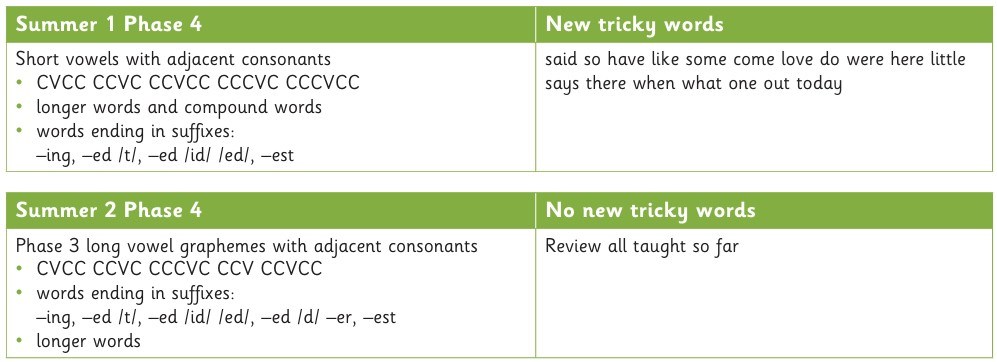
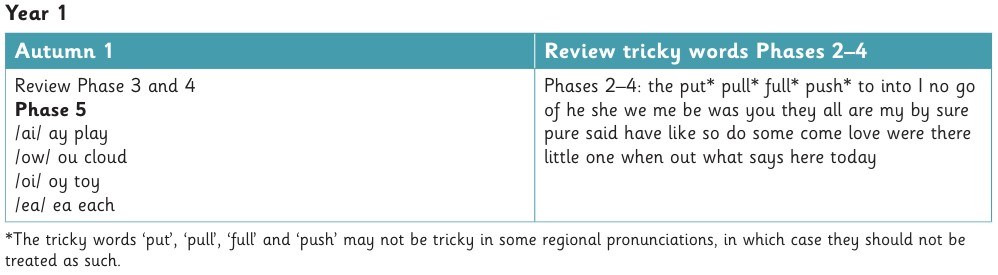
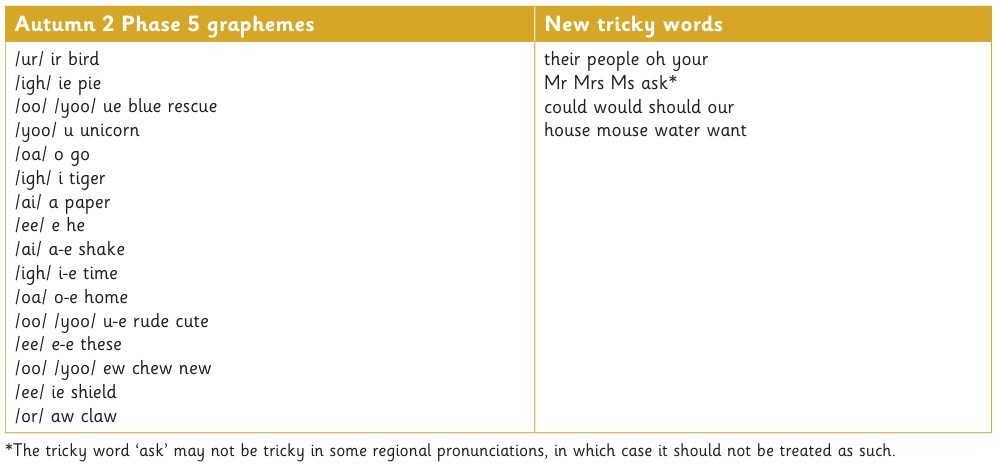
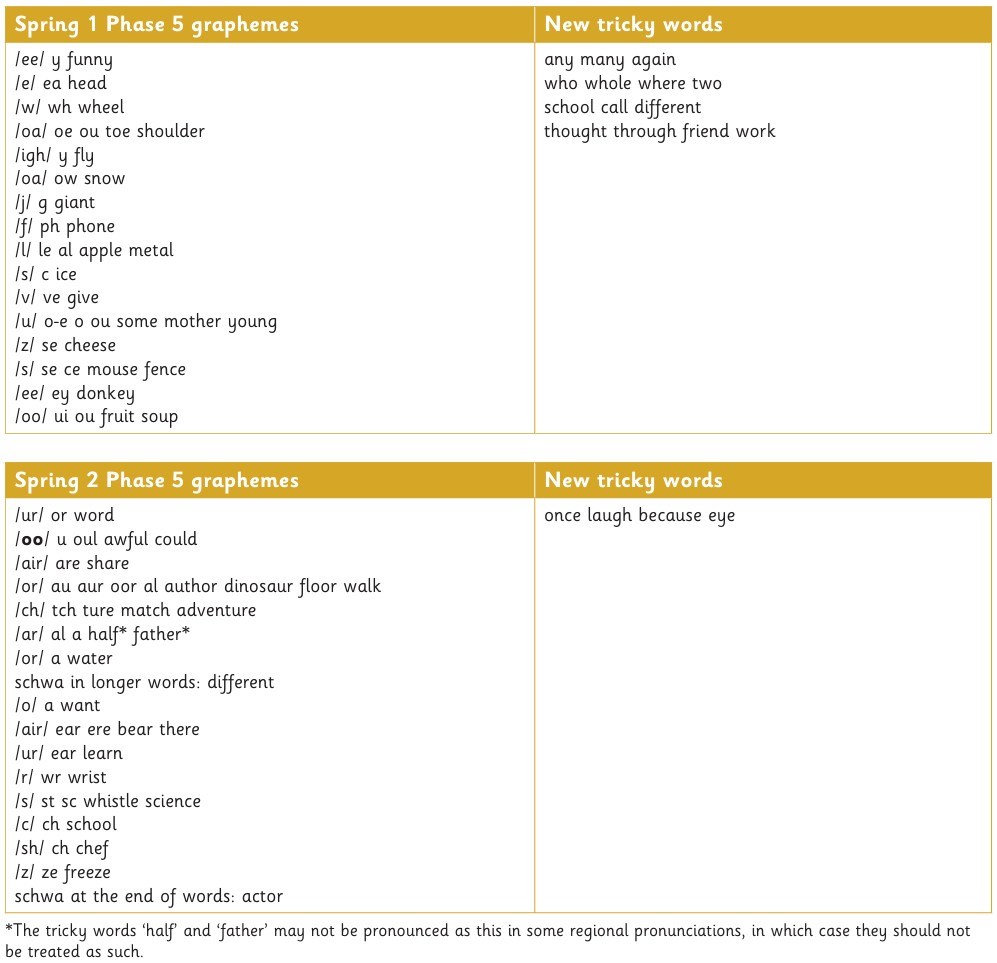
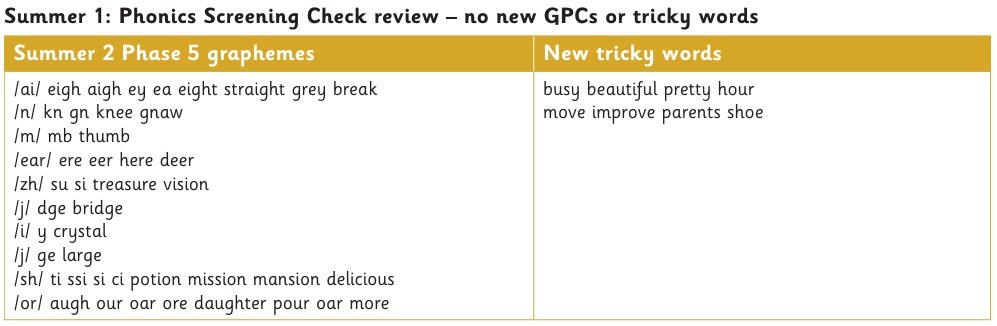
Reception and Year 1 overviews
This programme overview shows the progression of GPCs and tricky words that we teach term-by-term. The progression has been organised so that children are taught from the simple to more complex GPCs, as well as taking into account the frequency of their occurrence in the most commonly encountered words. All the graphemes taught are practised in words, sentences, and later on, in fully decodable books.
Children review and revise GPCs and words, daily, weekly and across terms and years, in order to move this knowledge into their long-term memory. Children need to learn to read as quickly as reasonably possible, so they can move from learning to read, to reading to learn, giving them access to the treasure house of reading.
Children who are not keeping up with their peers are given additional practice immediately through keep-up sessions.